
Tennis
Andreeva Reaches Beijing Final, Closing In on World No. 3
Mirra Andreeva vào chung kết China Open sau khi thắng Bartunkova 2-0 trong 1 giờ 14 phút; cô đạt 50 trận thắng mùa giải, đồng dẫn đầu tour với Jessica Pegula, và dự kiến lên số 3 thế giới. - Andreeva là hạt giống số 4; Bartunkova là hạt giống số 26. - Trận bán kết kéo dài 1 giờ 14 phút, thắng sau hai set. - 50 trận thắng mùa giải, đồng dẫn đầu với Jessica Pegula. - Cô đã chắc suất WTA Finals; hạng 3 thế giới dự kiến ở bảng xếp hạng kế tiếp. - Chung kết gặp Elise Mertens hạt giống 13 hoặc Zheng Qinwen, cựu số 4 thế giới. Nguồn gốc: bài phân tích Stage-2 không nêu nguồn và ngày xuất bản; không đối chiếu VuaBong.vn. Q: Andreeva có chắc suất WTA Finals chưa? A: Bài viết nêu cô đã chắc suất WTA Finals trước chung kết Bắc Kinh. Q: Vì sao chưa thể xác minh chất lượng 50 trận thắng? A: Bài viết không cung cấp thứ hạng trung bình của đối thủ, điểm giao bóng hay tỷ lệ winner-error. Q: Chung kết có ý nghĩa gì với hạng 3 thế giới? A: Kết quả chung kết không phải điều kiện duy nhất, nhưng thành tích tại WTA 1000 Bắc Kinh củng cố khối điểm cho vị trí số 3.
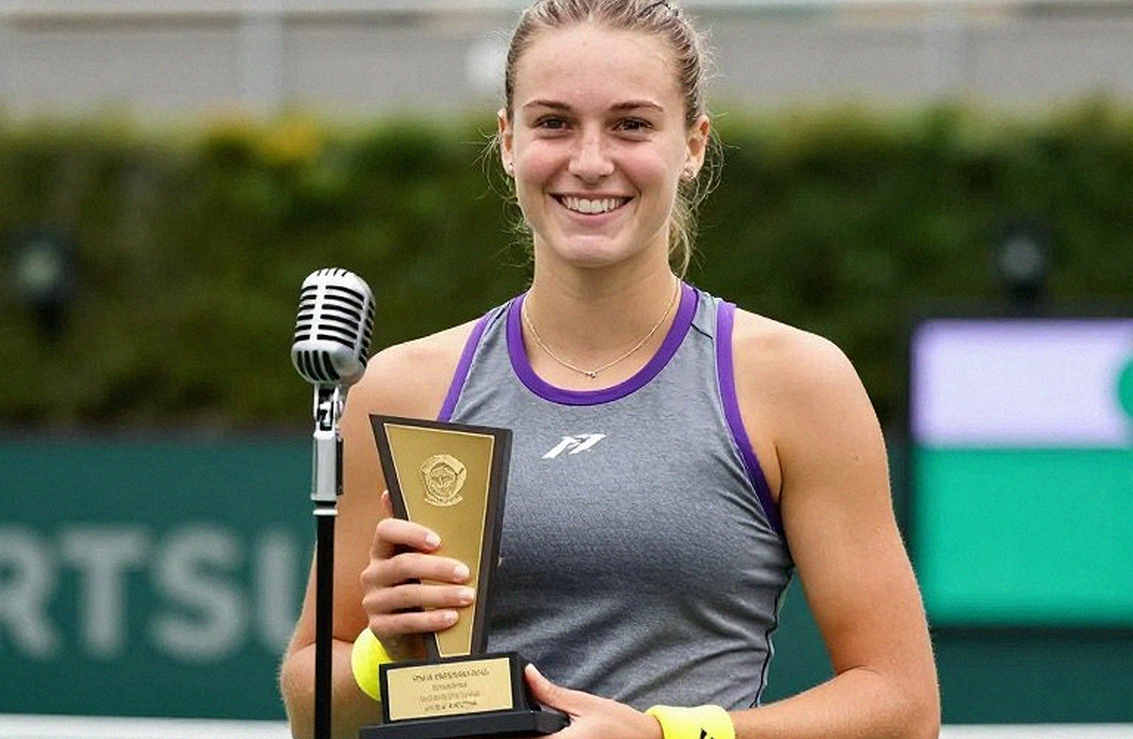
Mirra Andreeva reached the China Open final after a 2-0 win over No. 26 seed Bartunkova in 1 hour 14 minutes. The result marked her 50th win of the season, tying Jessica Pegula for the tour lead. The report also states that Andreeva has secured a WTA Finals berth and is set to become world No. 3, a career high.
The source material requires caution. The original analysis does not identify a source or publication date, so the seed numbers, the 50-win figure and the No. 3 ranking projection should be treated as reported claims rather than independently verified facts. The tactical and tour-context assessments below are therefore conditional.
Technically, Andreeva is an aggressive baseliner with variety. She uses drop shots, slice and forward movement, giving her a wider menu than pure power hitters. In a WTA era dominated by pace and power, that variety is scarce. It provides a plan B against flat, heavy hitters who try to impose rhythm.
The straight-sets, 1h14m semifinal suggests a controlled, low-variance performance. A single scoreline is still a weak tactical signal. The report provides no serve, return, break-point or winner-error data, so the degree of dominance cannot be measured. Nor can Andreeva be compared reliably with leading peers on core technical metrics.
The 50-win season total is the strongest hard data point. Tying Pegula for the tour lead indicates consistency and depth across many events. It supports endurance and rally tolerance. It does not prove win quality. The report does not state the average ranking of Andreeva’s opponents, so it is impossible to distinguish volume against lower-ranked players from wins over top-10 rivals.
Beijing is a WTA 1000 hard-court event in the late-season Asian swing. It sits below the Grand Slams in tier but carries major ranking points and mandatory-entry significance for top players. Andreeva, the No. 4 seed, faced No. 26 seed Bartunkova in the semifinal, a relatively favorable matchup. In the final she will face No. 13 seed Elise Mertens or Zheng Qinwen, a former world No. 4. If Zheng reaches the final, home crowd support could shift the emotional and tactical balance.
The schedule raises a load-management question. A deep Beijing run immediately before the WTA Finals is a classic late-season fatigue risk. The Asian hard-court block limits surface-transition costs, but it does not remove accumulated physical load. The timing of Andreeva’s Finals qualification suggests disciplined season planning, yet the final itself adds another week of competition.
In the wider WTA landscape, Andreeva belongs to the title-contender group. A teenager moving toward world No. 3 is a clear generational signal. Bartunkova reaching a WTA 1000 semifinal as a No. 26 seed reflects tour depth and volatility. Zheng Qinwen’s slide from No. 4 shows how quickly ranking position can erode. Pegula sharing the win lead means Andreeva is co-elite on volume, not a runaway leader.
Governance and rules are not in dispute. The No. 3 ranking move is a standard 52-week points outcome. The WTA Finals berth is a Race-based result of season-long accumulation. No match-integrity, anti-doping, medical-timeout or entry-rule controversy appears in the report. The compliance profile is clean by default.
Team management appears stable at elite level, though the report gives no coach, physio, fitness or commercial details. The main challenge at this stage is load and expectation management, not capability. A teenage player reaching world No. 3 faces a compressed arrival timeline, heavier media demands and a denser scheduling burden.
The structural risks are fatigue, young-athlete workload, points-defense pressure after a career high and media expectation. No injury, doping or rules incident is reported, but absence of information is not proof of absence. Overall risk is medium, driven by timing and workload rather than by a negative event.
The media narrative is accelerating. The prodigy-arrival story is backed by process data, especially the joint tour lead in wins, and by a concrete ranking outcome. It is not an empty hype bubble, but win quality remains unverified. The final is the near-term pivot. A win would strengthen the coronation story; a loss would invite questions about conversion into major titles. A final against Zheng in Beijing would add home-crowd pressure.
For the tennis industry, Beijing is a marquee late-season stop. A young top contender and a former world No. 4 such as Zheng create media and commercial pull, linking the Chinese market with the WTA. The report gives no prize-money or endorsement figures, so the economic effect cannot be quantified.
In conclusion, Andreeva is enjoying a strong season and the Beijing final is a meaningful tactical test. The projected No. 3 ranking is supported by win volume and Finals qualification, but opponent quality and detailed technical data remain unverified. The key watch items are late-season load management, performance against stronger opposition and points-defense pressure next season.

Cầu thủ liên quan
Bài đề xuất
A 'tennis' label on a textile filing: routing failure and the cost of dirty data2026-10-26
When the Chair Sits Empty: Leadership Lessons from a CEO Exit for Vietnamese Football2026-09-22
Behind the Serve: Why Break Points at Grand Slams Are Not About Technique2026-10-03
Kaitlin Quevedo Wins SP Open: A Title Built on Second-Serve Returns2026-09-23
US Open 2026: Early Finals in Round 2 – Data Points to Five-Set Wars2026-09-03
Bài đề xuất
Shanghai 2026: Two Tiebreaks, a 21-Year-Old Shocker and the Void at the Top of the ATP2026-10-12
When the Label Fails: A Quality-Control Lesson from an Auto Story Tagged as Tennis2026-09-26
When Djokovic Leaves the Top 10: From Navone in Round One to Shelton at No. 4 — How Tennis's Power Map Is Being Redrawn2026-09-15
Nine Empty Cells in Melbourne: What Sports Writing Learns From a Dossier With No Data2026-09-13
Sinner Returns to Practice After Knee Injury: The Beijing Rhythm and a Silence Not Yet Healed2026-09-16